Home › Industrial and Heavy-Duty Asphalt Paving
Handle heavy loads with confidence using industrial asphalt paving in Chandler, AZ. We design thick, reinforced pavements for truck yards, loading docks, and warehouse facilities that resist rutting and fuel spills. Contact us for a custom pavement design and detailed heavy duty paving quote.
Precision Asphalt Chandler provides professional industrial asphalt paving throughout Chandler, AZ, Arizona and the surrounding area. Our licensed, insured crew delivers safe, clean, on-time work with a free estimate before anything begins. Call (480) 462-5798 or request your free quote.
Industrial Asphalt Paving Built for Chandler’s Heavy Use
Industrial and heavy-duty asphalt paving is not the same as a basic parking lot overlay. At Precision Asphalt Chandler, we design pavements to carry continuous truck traffic, forklifts, loaded trailers, and static loads from containers or equipment that sit in one place for years. That changes everything about how we test the soil, choose the asphalt mix, and design the thickness.
In Chandler and the southeast Valley, industrial sites see brutal combinations of high pavement temperatures and heavy wheel loads. A surface that looks fine in cooler states can rut or shove here within a summer or two. Our industrial asphalt paving starts with a clear understanding of what actually uses the pavement: axle loads, turning patterns, staging areas, and where trucks stop, idle, or roll slowly. We put extra design focus on those abuse zones instead of applying a generic thickness across the whole yard.
Whether you operate a distribution center off the Loop 202, a manufacturing plant in the Price Corridor, or a fleet yard off Arizona Avenue, our goal is the same: create an industrial pavement structure that survives Chandler’s heat, weight, and tight schedules without constant patching.
How We Engineer Heavy-Duty Pavements for Chandler Sites
Every industrial asphalt paving project starts with a site visit. We walk the property with you, map truck routes, dock positions, and high-load areas, and identify conflicts with utilities or drainage. We want to understand your operations schedule, what can shut down and what cannot, and any issues you have with dust, mud, ponding water, or cracking.
Next, we assess the subgrade. In Chandler, many industrial sites sit on compacted native soil or imported fill over older agricultural land. We check moisture conditions, run proof rolling to spot soft zones, and, for heavier facilities, recommend geotechnical testing. Weak or poorly compacted subgrade is a common reason industrial pavements fail early, so we correct it with regrading, moisture conditioning, and proper compaction before any base rock or asphalt goes in.
For heavy-duty areas, we usually specify thicker aggregate base and often multiple asphalt lifts with different mix types. A typical layout might be 6 to 10 inches of aggregate base and 3 to 6 inches of asphalt, but the exact numbers depend on truck volumes, load types, and your performance expectations. We size everything to your reality, not to a generic minimum.
Materials and Mix Designs That Handle Heat and Heavy Loads
Industrial asphalt paving relies on selecting the right mixes for the Arizona climate and the type of loading. At Precision Asphalt Chandler, we work with local suppliers to use performance graded binders that stand up to Chandler’s pavement temperatures, which routinely reach well above the air temperature in summer.
For heavy truck lanes, docks, and turning areas, we often recommend a dense graded asphalt mix with a stiffer binder to reduce rutting and shoving. In some high stress locations, such as trash enclosure pads, fuel islands, or forklift cross-docks, we may propose a thicker asphalt section or even a composite design that ties into concrete to prevent edge breakdown.
We also consider whether your operation needs a finer surface mix for pedestrian comfort or forklift vibration control, or if a coarser, more skid resistant texture is better for truck traction in wet conditions. Industrial clients in Chandler often need fuel and oil resistant surfaces. While asphalt itself is vulnerable to long term petroleum exposure, we mitigate that with sealants in specific spill-prone zones, improved drainage that prevents standing product, and in some cases alternate surface treatments at loading areas.
Step-by-Step Process: From Old Pavement to Ready-for-Use Surface
On existing industrial sites, we begin by evaluating whether full-depth reconstruction or partial reclamation is required. If the base is still sound but the surface is shot, we may mill off the top lifts of asphalt and repave, which saves cost and shortens down time. If structural failure is more widespread, we sawcut and remove existing asphalt, undercut soft spots, and rebuild the base.
Subgrade preparation comes next. We grade for the right slopes to keep water away from buildings, docks, and equipment pads, then compact to meet load-bearing requirements. In some Chandler industrial yards built on older farmland, we have to deal with variable soil conditions. We handle this with targeted stabilization, such as adding aggregate, or using geotextile fabric where pumping or saturation is a risk.
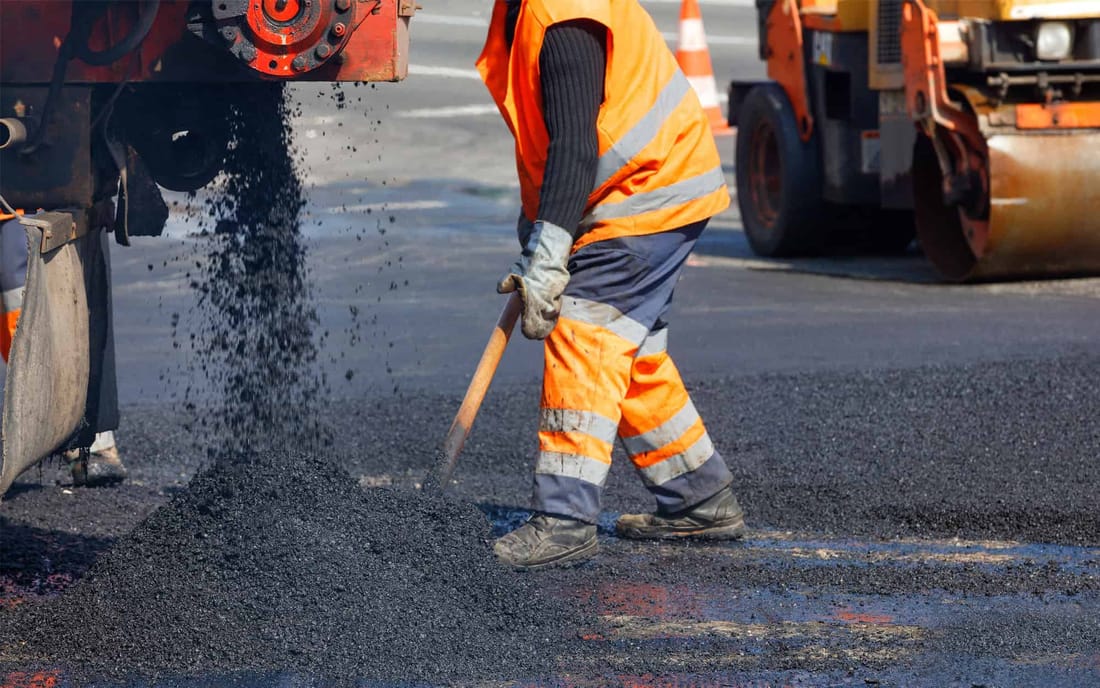
We then install the aggregate base, grading and compacting it to tight tolerances. A well built base is critical for forklifts and tight turning semi-trucks that magnify any surface irregularities. After base approval, we place asphalt in multiple lifts. Each layer is laid at a controlled temperature, compacted with the right rollers, and tested for density. We adjust rolling patterns in real time to achieve the compaction that heavy-duty pavements require to resist deformation.
Finally, we handle striping, truck route markings, ADA compliance around employee parking, and any bollards or wheel stops. For 24/7 operations, we often phase work so that critical access points remain open while new pavement is placed and cooled in other sections.
Project Costs, Bids, and What Drives Your Final Price
Industrial asphalt paving costs in Chandler vary widely, and we are transparent about why. The biggest factors are total pavement area, required thickness of base and asphalt, subgrade conditions, access constraints, and how much phasing is needed to keep your facility operating.
A truck court that needs 8 inches of base and 5 inches of asphalt will cost more per square foot than a light-duty employee parking area with 4 inches of base and 3 inches of asphalt, even on the same site. If we run into unsuitable subgrade that must be undercut and replaced, that adds time and material. On the other hand, if we can reuse part of the existing pavement structure by milling and overlaying, you can save significantly.
Working windows also affect pricing. Night work, weekend work, or very tight shutdown windows require additional crews and coordination. At Precision Asphalt Chandler we itemize our proposals so you can see how changes in design thickness, phasing, or material options affect your budget. We will often provide a base bid with heavy-duty standards, then offer alternates that let you choose where to concentrate investment, such as at loading docks and drive lanes instead of low load storage corners.
Common Industrial Pavement Problems and How We Prevent Them
Local industrial facilities in Chandler call us most often about rutting in truck lanes, breaking or crumbling at dock edges, and widespread fatigue cracking in older yards that were never designed for today’s traffic levels. We address each of these issues with targeted design and construction practices.
Rutting and shoving usually come from under-designed sections or insufficient compaction under high summer temperatures. We combat this with thicker sections where trucks turn and brake, stiffer binders, and strict compaction control. Dock edge failures are often a result of wheel loads hanging off the edge of pavement. Here, we may recommend turning radii adjustments, thicker asphalt edges, or concrete header curbs that give the trucks a stronger bearing point.
Fatigue cracking is often due to repeated overloading on a thin structure. If the base is still usable, we may mill and add a structural overlay that increases the total asphalt thickness to carry future loads. If not, we rebuild the section based on updated truck data. We also look at drainage, since standing water accelerates cracking and base failures. Regrading, new valley gutters, and small adjustments to downspout outfalls can dramatically extend the life of a new industrial pavement.
What Chandler Facility Managers Should Ask Before Hiring
When you are choosing a contractor for industrial asphalt paving in Chandler, you should ask pointed questions about heavy-duty design, not just “Can you pave this lot.” At Precision Asphalt Chandler, we expect to answer questions about how we calculated thickness, what binder grades we are using for the Chandler climate, how we will phase the work to keep your operation running, and what density targets we will meet.
Ask for examples of similar projects, such as distribution centers, manufacturing plants, or fleet yards, and find out how those pavements are performing after several summers. Ask how the contractor will protect utilities, manage access for trucks and emergency vehicles, and maintain clean, safe conditions for your employees while work is underway.
We also recommend that you ask about long term maintenance. A properly designed industrial asphalt pavement should include a realistic maintenance plan, including when to expect crack sealing, possible sealcoat in lower load zones, and when a structural overlay may be more cost effective than repeated patching. When you work with Precision Asphalt Chandler, we provide that roadmap up front so you are not guessing about future budgets or downtime.