Home › Commercial Asphalt Resurfacing & Overlays
Upgrade tired pavement without full replacement using commercial asphalt resurfacing in Chandler, AZ. We correct surface defects, address drainage, then install overlays that restore a smooth, professional look for parking lots and drive lanes. Request a free resurfacing evaluation for your property today.
Precision Asphalt Chandler provides professional commercial asphalt resurfacing throughout Chandler, AZ, Arizona and the surrounding area. Our licensed, insured crew delivers safe, clean, on-time work with a free estimate before anything begins. Call (480) 462-5798 or request your free quote.
Commercial Asphalt Resurfacing That Fits Chandler Properties
If you manage a shopping center, office park, industrial yard, or HOA in Chandler, you do not have to wait for your asphalt to completely fail before doing something about it. Commercial asphalt resurfacing and overlays give you a new, smooth driving surface on top of your existing pavement, without the full cost and downtime of tearing everything out.
Precision Asphalt Chandler focuses on resurfacing projects that make sense for our local conditions: intense sun, monsoon rains, and heavy daily traffic. We inspect your lot or roadway first to see if an overlay is truly the right fix. If the base is still sound and the cracking is not too deep, resurfacing can add 8 to 15 years of life to your asphalt at a lower cost than full replacement.
For Chandler businesses, the goal is usually a clean look, fewer trip hazards, and fewer complaints about potholes, all with minimal disruption to tenants and customers. We plan resurfacing work around your peak hours, deliveries, and access needs so you stay open while the lot is being improved.
How Commercial Asphalt Resurfacing & Overlays Are Actually Done
A quality overlay is not just spreading a new layer of blacktop over old pavement. The long-term performance comes from the prep work. When Precision Asphalt Chandler resurfaces a commercial lot or street, we typically follow these steps:
1. Detailed evaluation and coring: We walk the pavement, mark out structural failures, drainage issues, and soft spots. If needed, we take cores to see how thick the existing asphalt is and how strong the base is. This tells us if resurfacing is appropriate or if full-depth replacement is needed in certain areas.
2. Milling and transitions: We use a milling machine to grind down the existing asphalt at tie-in points like entrances, sidewalks, loading docks, and around utility covers. This keeps new asphalt from creating trip lips or high spots at door thresholds. In some cases, we mill the entire surface to correct rutting or shoving from heavy truck traffic.
3. Structural patching: Alligator cracking, potholed areas, or spots that pump water when trucks drive over them are cut out square, excavated, and rebuilt with new base and full-depth asphalt patches. Skipping this step is the number one reason cheap overlays fail early.
4. Cleaning and tack coat: We power sweep and blow off dust and loose material. Then we apply a tack coat, a thin layer of asphalt emulsion that helps the old surface bond tightly to the new overlay. In Chandler’s dry climate the tack coat is critical, since dusty or oxidized pavement does not grip new asphalt on its own.
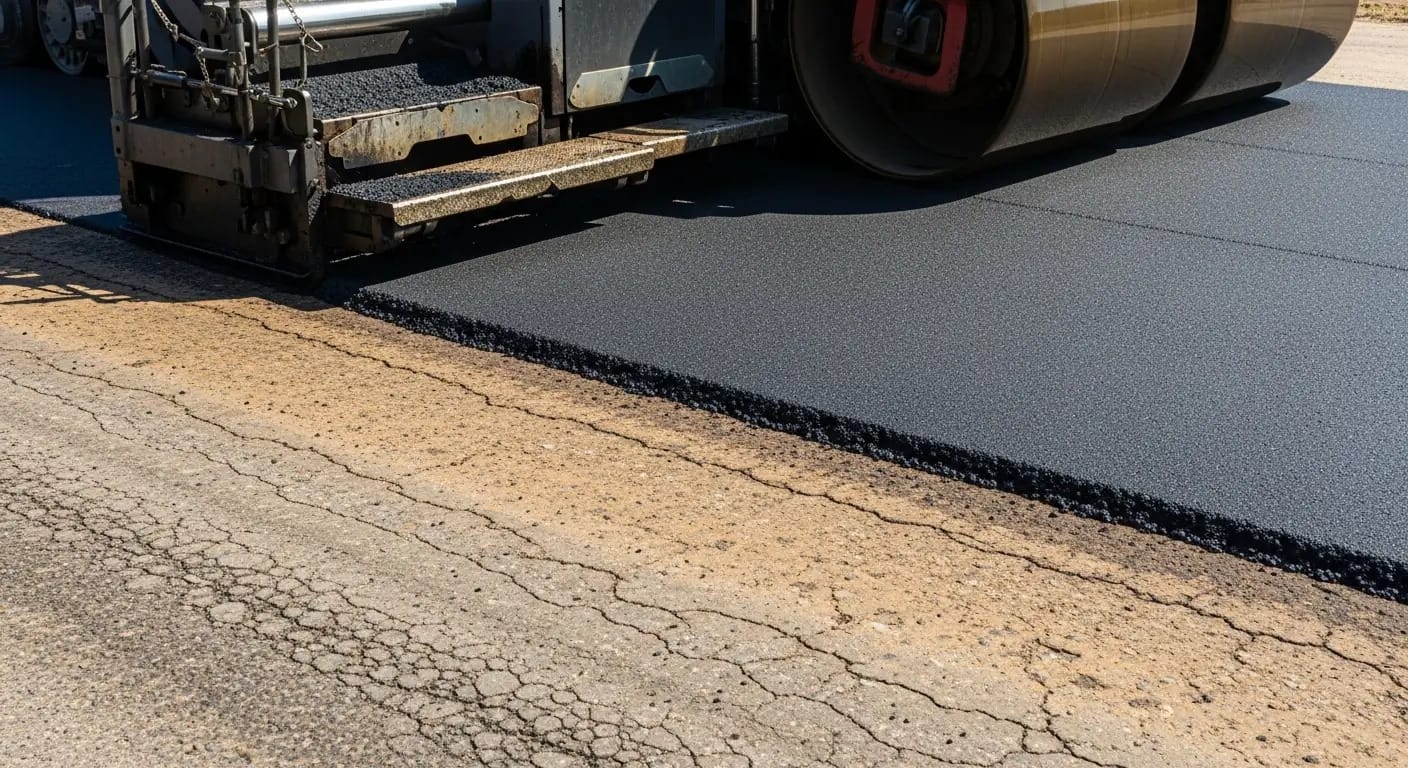
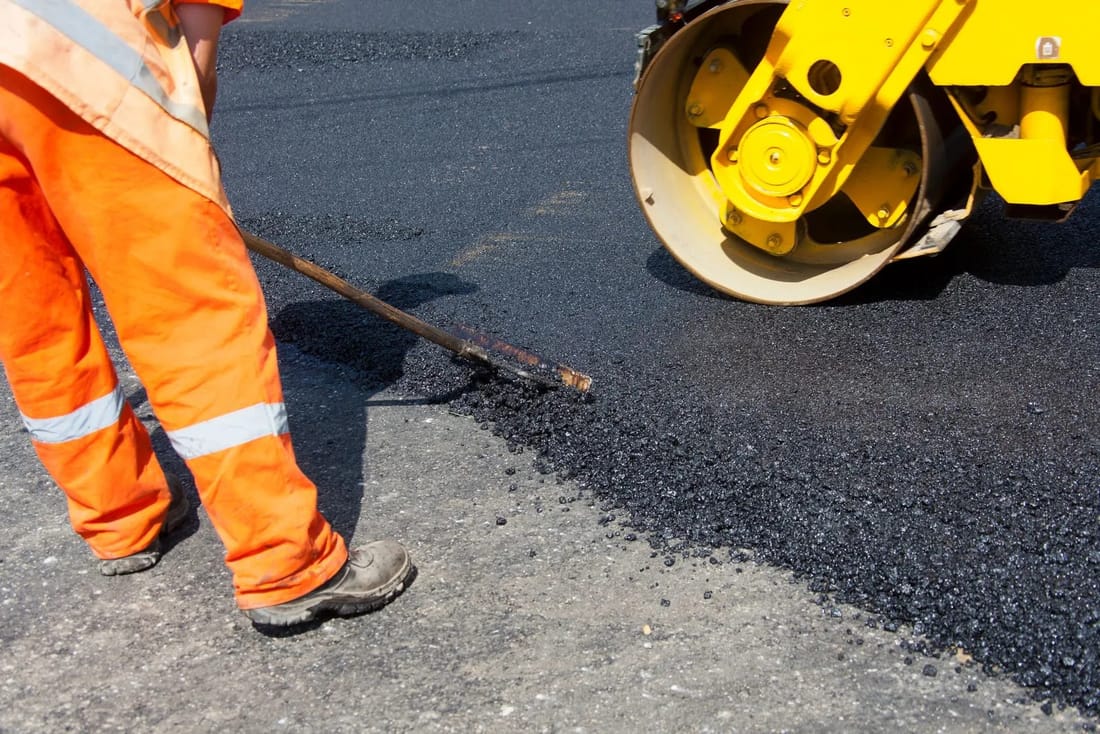
5. Placing the overlay: We use commercial paving machines to place a uniform mat, typically 1.5 to 3 inches thick, depending on traffic loading and existing conditions. Hand work is only used where machines cannot reach, such as tight corners or around gates.
6. Compaction and finishing: Steel drum and pneumatic rollers compact the new surface to the specified density. We check joints, edges, and low spots, and correct them while the asphalt is still workable. After cooling, we re-stripe the lot, install wheel stops if needed, and verify that drainage moves water to inlets instead of toward buildings.
Every one of these steps affects how long your overlay will last. Cutting corners might look fine for a year or two but becomes much more expensive once cracks reflect through and water reaches the base.
What Drives Cost For Commercial Asphalt Resurfacing In Chandler
Two Chandler properties of the same size can have very different resurfacing prices. Precision Asphalt Chandler walks you through the cost factors so you understand exactly where your budget is going.
Key cost drivers include:
• Existing pavement condition: Lots with widespread alligator cracking, numerous potholes, or base failures will need more milling and full-depth patching before an overlay can go down. That prep work is labor and material intensive, but it is what prevents the overlay from failing in a few years.
• Overlay thickness and mix type: A low-traffic office lot might do well with a 1.5 to 2 inch overlay using a standard commercial mix. High-traffic drive lanes, loading zones, or truck routes often need 2.5 to 3 inches and a mix designed for heavy loads and slow turning trucks. Thicker overlays cost more but reduce rutting and shoving where trucks stop and start.
• Drainage corrections: If your lot holds water after a monsoon storm, we may recommend extra milling to re-establish slope, installing valley gutters, or adjusting inlets. Correcting drainage while resurfacing adds some cost but prevents rapid damage from standing water combined with UV exposure.
• Access and phasing: Working in tight courtyards, gated communities, or high-traffic retail centers often requires more phases, flaggers, and off-hours work. Night or weekend paving is sometimes the only way to keep businesses operating, which adds labor cost but protects your tenant relationships.
• Markings and compliance items: Re-striping, ADA upgrades, signage, and new wheel stops are relatively small line items but are often required when you resurface. We can bundle these into one project so you do not have to coordinate multiple contractors.
We provide line-by-line proposals so you can see which items are must-haves for pavement performance and which are options you can phase over time. This helps property managers in Chandler match resurfacing work to capital budgets without sacrificing structural quality.
Local Considerations: Chandler Climate, Timing, And Traffic Patterns
Chandler’s climate is tough on asphalt. Prolonged 100-plus degree days dry out the binder and cause raveling and surface cracking. Sudden monsoon downpours then push water through those cracks into the base. Precision Asphalt Chandler plans overlay projects with these realities in mind.
The most reliable seasons for commercial asphalt resurfacing in Chandler are spring and fall. Temperatures are warm enough for proper asphalt compaction but not so extreme that the surface scuffs easily under turning tires. We do overlay work in summer when needed, but it requires tighter temperature control and traffic management, especially in shaded or enclosed areas where asphalt cools at different rates.
Traffic patterns also matter. For example, a Frye Road office park will have different needs from an industrial site closer to the Loop 202. On retail centers, we usually phase work so main drive aisles are done first or last depending on tenant schedules, while outer parking bays are done in separate phases so you always have some usable parking. For distribution yards, we plan around truck delivery windows and may use thicker overlays or localized full-depth reconstruction in turning radii and dock aprons.
We also pay attention to dust and wind. Chandler’s dry conditions and afternoon breezes can blow dust onto tack-coated surfaces if the job is not sequenced correctly, which weakens the bond between layers. Our crews stage sweeping, tacking, and paving so the surface stays clean during the critical bonding window.
All of this local planning is meant to give you fewer callbacks, fewer upset tenants, and a finished surface that behaves the way you expect under real Chandler traffic and weather, not under laboratory conditions.
How To Know If Your Commercial Property Is Ready For An Overlay
Resurfacing is a strong choice in several common situations. Precision Asphalt Chandler typically recommends commercial asphalt resurfacing and overlays when:
• The pavement looks gray and dry with surface cracking, but the surface does not move noticeably under vehicle weight.
• There are some potholes or broken areas, but they are isolated and can be cut out and patched, not spread across the entire lot.
• Drainage is generally acceptable, or can be corrected through limited milling or minor grading, without rebuilding the entire base.
We may advise against an overlay if you have extensive structural cracking from edge to edge, widespread base failures (areas that pump water or feel soft), or large sections that have settled. In those cases, a combination of full-depth reconstruction in bad areas and an overlay on the remaining pavement can still be a workable plan, but we will be clear about what is cosmetic and what is structural.
Before you make a decision, we encourage a site walk with our estimator. We can mark out areas that need patching, show you where water is getting trapped, and explain how thick an overlay makes sense for your type of traffic. This way, your budget is aimed at the problems that actually shorten pavement life, not just the ones that look bad on the surface.
If you are responsible for a commercial property in Chandler and your lot is rough, cracked, or starting to generate complaints, commercial asphalt resurfacing may be the middle ground between constant patching and very expensive full replacement. Precision Asphalt Chandler can assess the pavement, provide options with clear pros and cons, and schedule work around your business so you get a stronger, better looking surface with as little disruption as possible.